
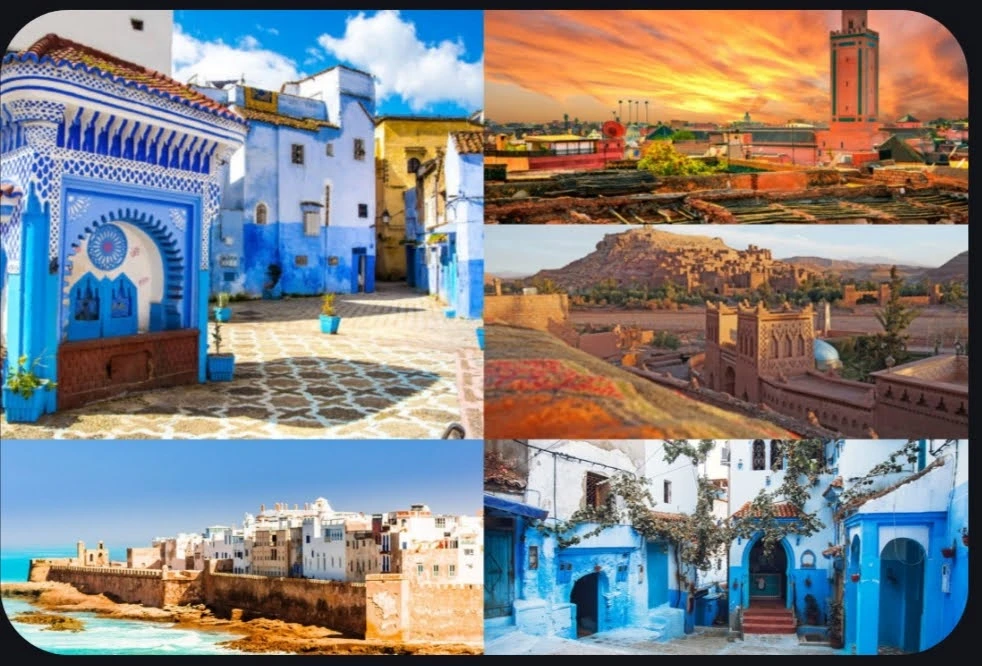
Morocco is a land of vibrant colors. From the deep blues of Chefchaouen’s walls to the earthy reds of Marrakech, every shade carries history, symbolism, and meaning. Colors are not only aesthetic in Morocco—they reflect identity, spirituality, and tradition. Let’s explore what some of the most iconic colors represent in Moroccan culture.
—
1. Blue – Spirituality and Peace
The famous blue-painted streets of Chefchaouen symbolize serenity and spirituality. Traditionally, blue is linked to the sky and heaven, reminding people of the divine. In Moroccan culture, it is also believed to ward off evil spirits. Beyond architecture, blue is used in pottery, tiles, and traditional clothing like the djellaba.
—
2. Red – Strength and Vitality
Red is one of the most powerful colors in Moroccan culture. Seen in the red city of Marrakech and the Moroccan national flag, it represents bravery, strength, and vitality. It is also a color of celebration, often worn at weddings and festive occasions. Red spices like paprika and saffron add even more vibrance to Moroccan cuisine.
—
3. Green – Fertility and Islam
Green is considered a sacred color in Islam and holds deep spiritual meaning in Morocco. It symbolizes paradise, renewal, and fertility. You’ll often see green tiles in mosques, gardens, and fountains. In traditional clothing, green reflects prosperity and harmony.
—
4. White – Purity and Peace
White is associated with purity, simplicity, and peace. Many Moroccans wear white djellabas during religious festivals, funerals, or spiritual gatherings. White also represents light and protection, making it a favored color in traditional homes and riads.
—
5. Yellow/Gold – Wealth and Warmth
Yellow and gold are tied to wealth, prosperity, and the warmth of the Moroccan sun. These shades appear in textiles, jewelry, and lanterns. Gold embroidery is especially significant in traditional wedding kaftans, symbolizing joy and good fortune.
—
6. Black – Power and Mystery
Though less dominant in Moroccan design, black represents strength, mystery, and resilience. It is often used in traditional Berber carpets and jewelry, where black details enhance contrast and meaning.
—
Final Thoughts
Colors in Morocco are more than decoration—they are a living language of culture and history. Whether you’re wandering through the blue alleys of Chefchaouen, admiring the red walls of Marrakech, or sipping mint tea in a courtyard filled with green tiles, you’ll realize that Morocco speaks through its colors. Each shade tells a story, inviting travelers to see the country not just with their eyes, but with their hearts.